
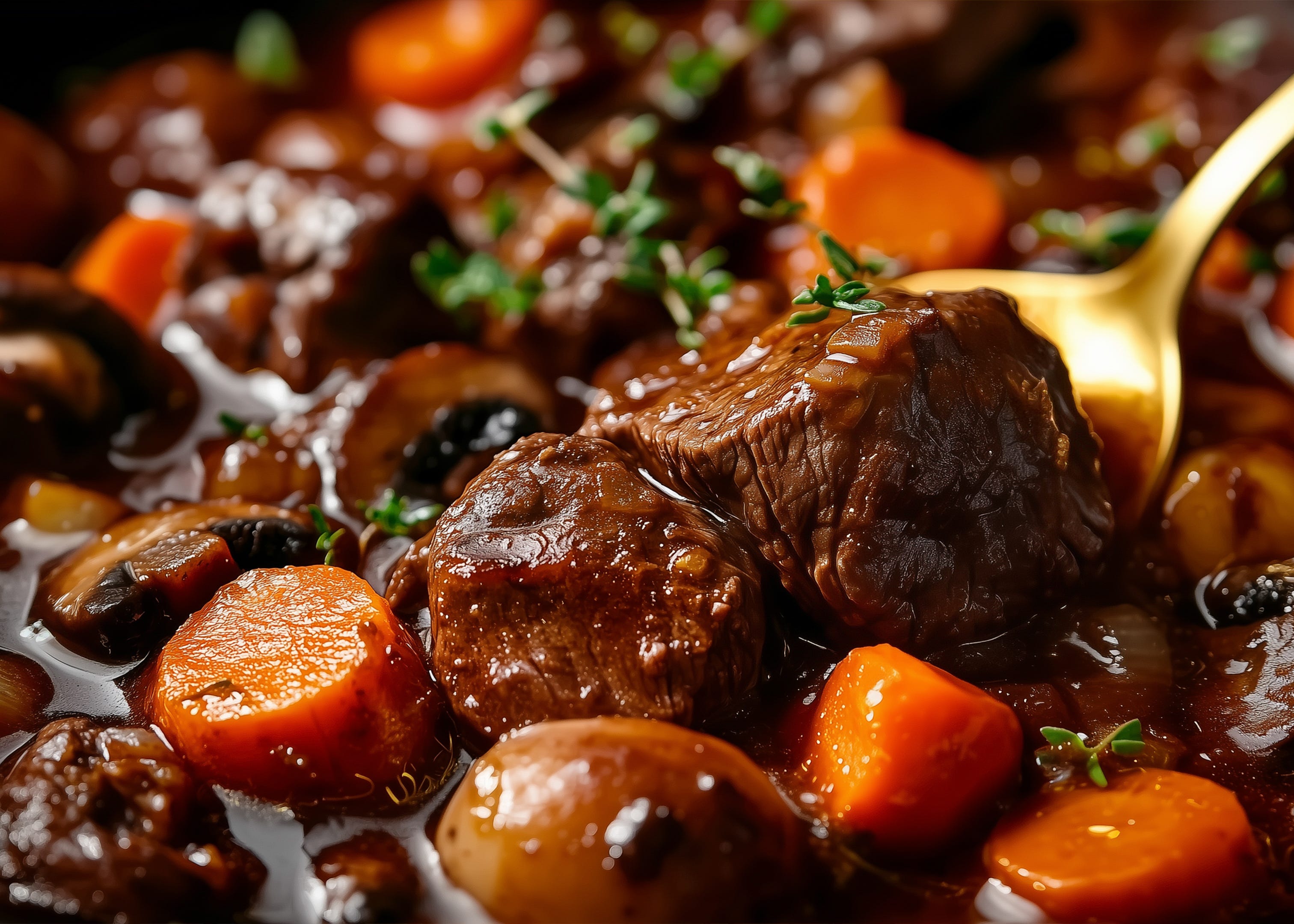
Ever Had Meat That Melts in Your Mouth?
Ever had a bite of slow-braised meat that practically dissolved in your mouth, rich with flavour and impossibly tender? What creates that texture? The answer lies in finding the right balance between preparation and cooking time for the cut you're using.
Here are a few tips for a braise that melts in your mouth.
Cooking Method
Whether you cook on the stovetop, in the oven, in a slow cooker or in a pressure cooker, the timing is not the same. A stovetop braise may simmer for 2 to 4 hours, while a slow cooker may take 6 to 8 hours.
Meat Preparation
Searing the meat first helps retain moisture and builds flavour that would otherwise be missed. Bringing the meat to room temperature before searing gives you a better sear, the Maillard reaction, which helps with the final texture. And once the meat is seared, add it gently to simmering liquid rather than boiling liquid. This is crucial for that melt-in-your-mouth tenderness.
Type and Size of Meat
Tougher cuts like chuck, brisket or bottom round are ideal for braising because of their connective tissue, which breaks down over a long cook. Larger pieces take longer than smaller, uniform chunks. Yet did you know that larger pieces turn out far more tender?
Larger pieces retain moisture better, because their surface area is small compared with their volume. That reduces the chance of drying out and lets the inside cook gently and evenly. The slower heat also gives collagen, the protein responsible for toughness, time to turn into silky gelatin. That softens the meat and enriches the sauce, creating the melt-in-your-mouth experience. It takes a little longer, but larger cuts are well worth the wait.
Volume
The quantity you cook affects the timing too: a larger pot needs longer to cook evenly and develop its flavour.
Tenderizing Techniques
Marination
Soaking meat overnight in an acidic marinade, such as wine, vinegar or citrus, can break down tough muscle fibres and add flavour.
Wine Preparation
Par-boiling wine before it goes into the pot mellows its acidity and concentrates its flavour, for a more harmonious dish.
Slow Cooking
Cooking low and slow, between 284°F and 320°F for four to six hours, lets connective tissue break down into tender meat.
Dan Wilson, a Michelin-starred chef, emphasizes starting with room-temperature beef to avoid stressing the meat. A cartouche, a parchment paper lid, also helps hold in moisture during the cook.
What We've Learned
We've made plenty of mistakes along the way; trial and error is part of the process. As a restaurant, when a braise needs to be ready in time, we've tried turning up the heat in the final stretch. Sometimes it works, but push it too far and you're left with meat that falls apart but is dry. And what's the point of tender meat if it isn't juicy?
That balance is the heart of a good braise. Rushing with higher heat makes the liquid evaporate too quickly and strips the meat of its moisture. Even if the connective tissue breaks down, the dish feels incomplete without that juiciness. A good braise asks for patience: a low, slow simmer that lets flavours meld, collagen turn to gelatin, and the meat stay moist.
We hope these tips inspire you to try a slow braise at home. And when you're next at Gems, we'd love to hear what you think of ours.